

PNY vs. NVIDIA AI GPUs: Is There Actually a Difference?
PNY vs. NVIDIA GPUs: Is There Actually a Difference?
Everything you need to know about the identical, yet differently branded RTX Pro Blackwell GPUs.
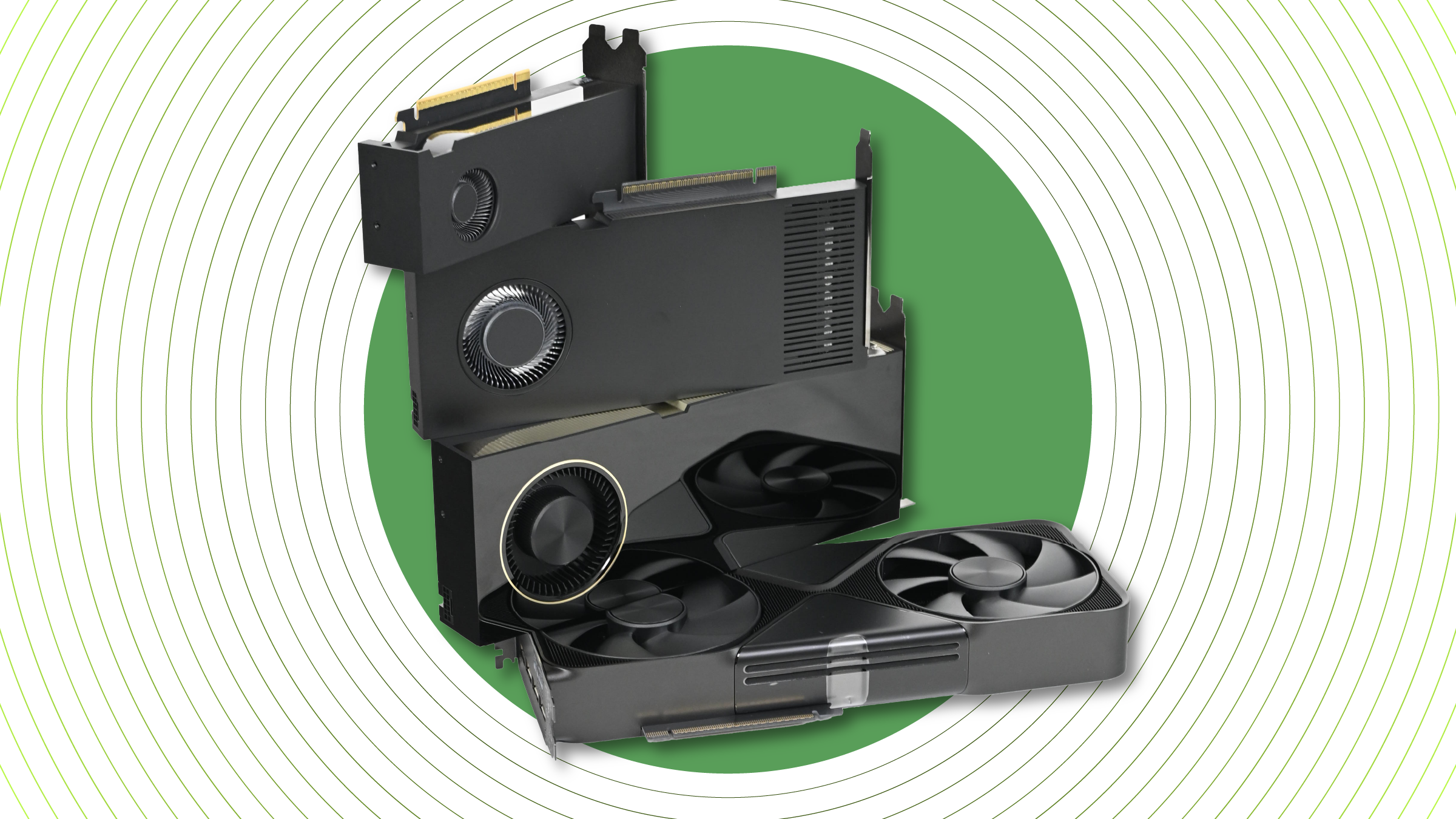
If you're shopping for professional NVIDIA RTX Pro Blackwell AI-ready GPUs for a brand new workstation or server, you've probably noticed the same card listed under two different brands: one sold by PNY and one sold by NVIDIA. So, what's the deal with that? Are you getting a lesser product if you go PNY?
The short answer is: No. The hardware is identical. But there are a few differences in packaging, warranty, availability, and pricing that are worth understanding for purchasers tying up significant amounts of capital in these GPUs.
First, let's refresh our memory on PNY's role in the hardware market. PNY is one of NVIDIA's longest-standing authorized channel partners, with their relationship going back over 20 years. You might recognize the brand from their consumer RTX GPU lineup, which features recognizable product lines such as VERTO, Epic-X, and XLR8. PNY is also a well-known name in memory modules, SSDs, and other types of flash storage.
But enterprise is a different story from consumer hardware. When PNY sells an "NVIDIA RTX Pro 6000 Blackwell", it's the same GPU die, the same VRAM, the same PCB, and the same reference cooler as the NVIDIA-branded version. Unlike consumer GeForce cards where companies like ASUS or MSI (or even PNY's consumer division themselves) design their own custom boards and heatsinks, PNY receives and distributes these cards under PNY branding for the professional lineup.
In short, PNY and NVIDIA professional workstation GPUs are identical. This applies to the entire RTX Pro Blackwell GPU family, as well as their DGX workstations including the DGX Spark.
So what's left to consider?
If everything about the physical product between NVIDIA and PNY's workstation GPUs is identical, then why do both exist?
In reality, there are differences, but they are not something you'll find on the physical end product. These GPUs are different in the sense that their availability, pricing, the channels you're buying them through, who supports you after the sale, and packaging slightly differ.
Here's a quick comparison of the four packaging variants you'll encounter:
| SKU | Packaging | Accessories | Warranty |
|---|---|---|---|
| PNY Packaged(Models ending in -PB) | Individual non-descript box with serial number | Power adapter cable included on models with TDP greater than 120W | 3-year limited, through PNY |
| PNY Bulk(Models ending in -BLK) | No individual box; sold in sealed anti-static bags with serial number label | Power adapter cable included on models with TDP greater than 120W | 3-year limited, through PNY |
| NVIDIA Retail(Models ending in -000) | Branded NVIDIA retail box | Power adapter cable included on models with TDP greater than 120W | 3-year limited, through NVIDIA |
| NVIDIA OEM(Models ending in -000-01) | No individual box; sold in sealed anti-static bags with serial number label | Power adapter cable included on models with TDP greater than 120W | 3-year limited, through NVIDIA |
The sections below go into more detail on each of these differences.
Understanding the SKU naming conventions
Not only are there PNY and NVIDIA versions of each workstation card, but both companies actually sell multiple packaging variants of the same card, and the part numbers tell you which ones you're getting.
Understanding these suffixes can save you confusion at checkout, and potentially some money. Read on below to learn how to identify what's what.
PNY naming: -PB vs. -BLK
PNY part numbers end in either -PB or -BLK. The -PB ("Packaged/Boxed") version ships in individual black boxes with the serial numbers printed on it. It's the closest thing you can get to a "retail package" in the world of enterprise hardware. The -BLK ("Bulk") version skips the individual box - the cards arrive at the resale destination in plain brown boxes (with the standard anti-static bag and padding) with the cards safely and compactly packed together. Bulk units still include the power cable (in most cases) and carry the same full warranty. They're typically a bit cheaper, making them a solid choice for multi-GPU builds or organizations who need to order high volume. They are mainly intended for system integrators, but many authorized retailers such as Central Computers like to sell individual units to customers who want a cheaper price and don't mind the lack of packaging; a win-win situation for both the consumer and seller.
For example, the PNY RTX Pro 6000 Blackwell Workstation Edition comes as:
- VCNRTXPRO6000B-PB: Boxed/Packaged Version
- VCNRTXPRO6000B-BLK: Bulk Version
Neither -PB nor -BLK is inherently more available than the other. Sometimes we have both in-stock at Central Computers, other times only one. It just depends on the timings of the shipments and general market conditions.
NVIDIA naming: Retail (-000) vs. OEM (-000-01)
NVIDIA's own part numbers follow a similar theme of splitting retail-friendly models and bulk OEM models apart with separate model numbers, albeit in a not-as-immediately-obvious fashion. SKUs ending in just -000 (e.g. 900-5G144-2500-000) are the Retail versions, intended for individual sale with standard packaging. SKUs ending in 000-001 (e.g., 900-5G144-2200-000-001) are the OEM versions, which are bulk-packaged for system integrators without individual retail boxing. Same card, same warranty, same specs.
For example, the NVIDIA RTX Pro 4000 Blackwell Workstation comes as:
- 900-5G147-2570-000: Retail Version
- 900-5G147-2270-000-001: OEM Version
Similar to PNY's -PB and -BLK models, neither NVIDIA's Retail nor OEM is consistently more available than the other; pricing and availability may fluctuate depending on timing and market conditions.
Availability and distribution – each GPU tells a story
The differences between all these graphics cards (and really any product) don't just end at the physical differences. When a buyer gets their hands on an RTX Pro Blackwell GPU, it reaches that destination through different distribution pipelines depending on the model.
At the start of it all, NVIDIA manufactures every RTX Pro Blackwell GPU themselves.
From there, PNY, as an authorized partner of NVIDIA, receives a portion of these cards and distributes them under its own brand through its own network of distributors and authorized resellers, such as Central Computers. NVIDIA's self-branded RTX Pro Blackwell cards travel a separate path, moving entirely through NVIDIA's direct channel partners right off the bat. In the case of both brands, the Retail/Packaged and OEM/Bulk variants are initially intended for different types of customers with needs of varying scales, but both ultimately end up at Central Computers as available for consumer purchase.
No matter what packaging option you choose from either company, the GPU inside is physically and capably identical across its Retail, Packaged, OEM, and Bulk variants, so don't limit yourself to one brand or packaging type when shopping.
What's in the box: power cables & other trinkets
One thing that often catches our customers off guard with RTX Pro Blackwell GPUs is what's actually included in the box, specifically the power cable.
At the time of writing, all RTX Pro Blackwell GPUs with a rated TDP over 120W use a 12VHPWR 16-pin power connector. Luckily, for any users with older 8-pin power supplies (if you still have the matching cables, of course), most RTX Pro Blackwell GPUs come with a 4x 8-pin to 16-pin adapter cable included in the box.
If your card doesn't come with a 4x 8-pin to 16-pin adapter cable, don't panic! We carry compatible 16-pin GPU power cables and 16-pin ready power supplies in our stores. Just ask at checkout or contact our sales team for assistance.
So, which should you buy?
For the vast majority of buyers, the decision is straightforward: buy whichever version is in stock at the best price. Any given RTX Pro Blackwell GPU model is identical between its PNY and NVIDIA variants, whether individually or bulk-packaged.
If both are available and similarly priced, then the tiebreaker would be your support preference. PNY-branded graphics cards have a 3-year limited warranty, which are processed through PNY. NVIDIA-branded cards also have a 3-year limited warranty, and go directly through NVIDIA. If your organization already has a relationship with one, that's a decent reason to lean one way.
Before you buy: check if you qualify for a discount
On top of our competitive pricing and availability, Central Computers offers discounts on qualifying RTX Pro Blackwell GPUs through two different programs:

1.) NVIDIA Inception
We are proud to offer discounts through NVIDIA Inception, a free program designed to help startup companies in AI, data science, and HPC evolve faster through training programs, hardware and software discounts, and networking opportunities.
If you are part of a startup in any of the aforementioned or adjacent fields in need of enterprise GPUs, consider requesting a quote from us today and applying to the NVIDIA Inception program.

2.) PNY Higher Education Promotion
Not part of a startup company? PNY might have you covered! We are proud to also offer PNY's Higher Education Promotion program, which provides special pricing on qualifying PNY-branded professional GPUs to accredited educational institutions.
Still need help choosing?
Our team at Central Computers can help you select the right GPU for your AI or HPC workload. Whether you're upgrading a single workstation and need help choosing the right card, or require an informed decision on what hardware to buy for a new fleet of multi-GPU servers, we can guide you through it all.

Please complete your information below to login.
Sign In
Create New Account